Floral Door Welcome Sign Laser Cut Review
As someone who has spent years evaluating machine embroidery design assets for both personal passion projects and commercial client work, I know that the difference between a good idea and a finished product often lies in the details. Recently, I examined the Floral Door Welcome Sign Laser Cut, a file listed under the Crafts and Graphics categories. At first glance, the title suggests a laser-cut wooden sign, but my perspective is rooted in how this visual concept translates when stitched into fabric. In this review, I am putting myself in the shoes of an embroidery designer asking: does this design hold up when moved from a digital mockup to a real-world textile application?
The First Impression: Mood and Visual Personality
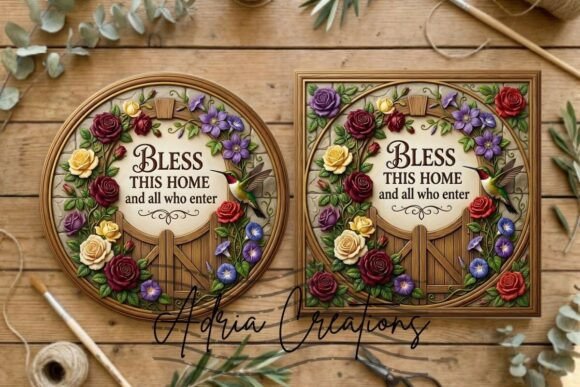
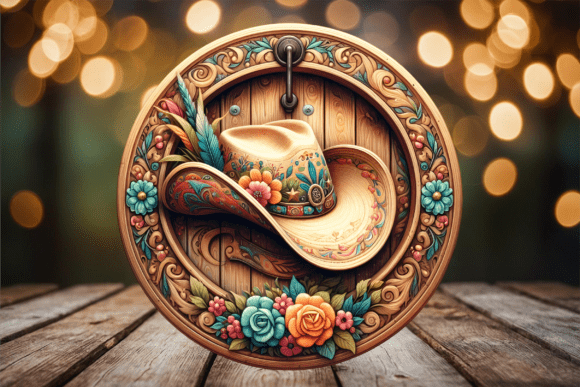
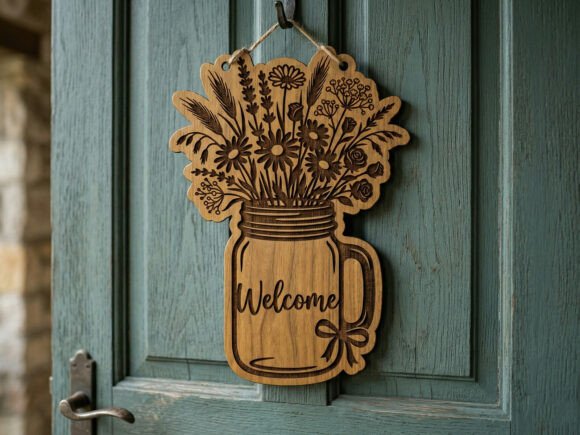
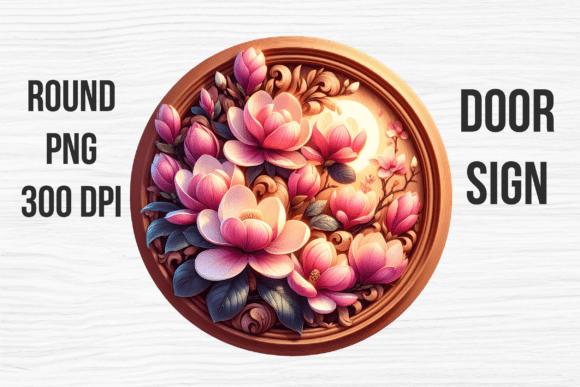
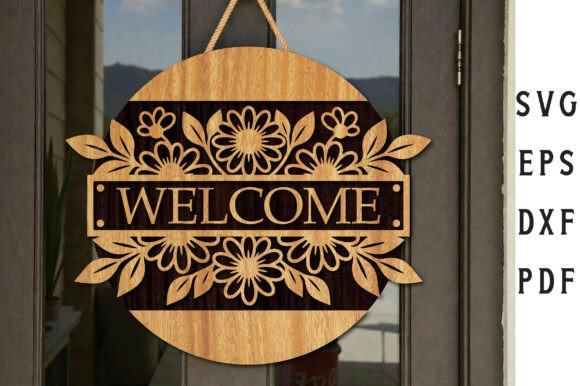
The moment you look at the Floral Door Welcome Sign Laser Cut, it evokes a specific feeling: warmth, hospitality, and a touch of rustic elegance. The layout feels balanced, suggesting a central focal point surrounded by organic floral elements. For an embroiderer, the immediate question is always about texture. A design meant for wood often relies on crisp edges and deep cuts, but embroidery relies on thread density and stitch direction. This design appears to have a strong outline structure, which is excellent for creating a clear border using satin stitches. The floral motifs seem detailed enough to add character without being so intricate that they risk losing definition on smaller garments.
I imagine this design not just as a static image, but as a welcoming gesture on a front porch or a cozy accent in a nursery. The visual personality is inviting, making it a strong candidate for home decor items like pillow covers or kitchen towels. However, the "sign" aspect implies a rectangular or arched shape that needs careful placement on curved surfaces like sweatshirts or tote bags. If you are planning to use this as a custom apparel piece, the shape must be respected during digitizing to ensure it doesn't look awkward on a shoulder or chest area.
Real-World Application: From Digital File to Finished Product
To truly understand the value of this asset, let's walk through a practical scenario. Imagine you are an Etsy seller preparing a batch of handmade gifts for the upcoming holiday season. You decide to create a line of personalized aprons and baby onesies featuring a "Welcome" theme. You pull up the Floral Door Welcome Sign Laser Cut design file to see how it would translate.
On a sturdy cotton canvas tote bag, this design could shine. The fabric provides a stable base, allowing the satin stitch outlines to lay flat and crisp. The floral details would pop against a neutral background, creating a high-end boutique feel. Similarly, for a baby item like a muslin blanket or a soft knit onesie, the gentle curves of the flowers offer a softer aesthetic than bold geometric patterns. It fits perfectly into the niche of personalized gift products where sentimentality drives sales.
However, consider the challenge of applying this to a stretchy fabric like a hoodie or a fitted cap. Here, the design requires more scrutiny. If the original vector includes fine lines intended for a laser cutter, those might become too dense or messy when converted to fill stitch on a flexible material. You would need to adjust the stitch density to prevent puckering. For a small shop product like a branded patch, the design works well if the borders are reinforced with a running stitch or a tighter satin edge to prevent fraying over time.
Where Caution Is Required
While the Floral Door Welcome Sign Laser Cut is visually appealing, there are specific scenarios where it demands careful handling. One of the primary concerns is the scale of the design relative to the hoop size. If you attempt to stitch this on a very small hoop, such as one used for a cap brim or a tiny baby bib, the floral details might get lost or appear cluttered. Always test the design at 50% and 75% scale before committing to a full production run.
Another critical factor is the fabric texture. On thin, sheer fabrics, the weight of the threads used to render the "sign" portion of the design could cause the material to sag or tear. Dark fabrics also present a challenge; unless you select high-contrast thread colors, the delicate floral lines might disappear into the background. I recommend testing the design on a scrap piece of your actual target fabric first. This step is non-negotiable for any professional embroidery project.
Furthermore, if you plan to sell these items commercially, consider the durability. Designs with large areas of fill stitch can be heavy and may wear faster on items that undergo frequent washing, like kitchen towels or work aprons. Ensure that the design files provided allow for adjustments in stitch count and density. If the file is strictly a graphic for laser cutting without embroidery-specific parameters, you will need to manually convert the paths into valid machine embroidery commands.
Design Notes for the Practical Creator
For those of you looking to integrate this design into your craft business or Etsy listings, here are some essential technical considerations. First, verify the file formats. Are you receiving a vector file (like .DXF or .SVG) that needs digitizing, or do you have a ready-to-stitch file (like .PES or .DST)? If it is a vector, you will need to assign appropriate stitch types to different parts of the image. The outer border should likely be a satin stitch for a clean finish, while the inner floral elements might benefit from a combination of fill and running stitches to reduce bulk.
Stabilizer selection is equally important. For a design with significant detail, a cut-away stabilizer is often the safest bet to maintain the integrity of the stitches, especially on woven fabrics. If you are working with knits, a tear-away might suffice, but only after testing. Also, pay close attention to the thread colors. A monochromatic scheme might look elegant on a digital mockup, but in reality, you need to choose threads that complement the fabric color to ensure the design stands out.
Finally, think about the presentation. A well-executed embroidered patch or a beautifully stitched welcome sign on a tote bag can significantly boost customer trust. The quality of the stitching reflects directly on your brand consistency. When creating printable mockups for your online store, ensure the lighting highlights the texture of the thread, giving potential buyers a realistic sense of the finished product.
Final Thoughts on Value and Versatility
The Floral Door Welcome Sign Laser Cut offers a versatile foundation for a wide range of creative endeavors. Whether you are a hobbyist looking to make a unique gift for a friend or a seasoned entrepreneur expanding your small shop product line, this design has the potential to elevate your work. Its strength lies in its classic, welcoming theme, which resonates with customers across various demographics.
However, success depends on your ability to adapt the design to the constraints of embroidery. By paying attention to thread colors, stitch density, and fabric compatibility, you can transform a simple graphic into a premium handmade product. Remember to check the licensing terms carefully before selling finished items or digital derivatives. With the right preparation, this design can be a valuable addition to your collection of design assets, helping you create memorable commercial embroidery pieces that customers love.