Hand-drawn Floral and Leaf Illustrations
I have spent years reviewing graphics for the embroidery industry, and I know that a pretty image on a screen often tells a very different story once it hits the hoop. When I first encountered Hand-drawn Floral and Leaf Illustrations, my initial reaction was one of genuine interest. The aesthetic feels organic and slightly imperfect in that charming way that machine embroidery loves. It avoids the rigid, geometric look that plagues so many digital files, offering instead a softer, more artistic vibe that fits perfectly into the current trend of handmade authenticity.
This review is not just about the visual appeal; it is about how this design performs when translated from an EPS or SVG file into actual thread. As a designer who frequently prepares assets for Etsy sellers and boutique owners, I am looking for practical utility. Does this design hold up under tension? Will the details survive a wash cycle? Can it be scaled without losing its soul? Let's walk through exactly how I would approach using Hand-drawn Floral and Leaf Illustrations in a real-world commercial project.
The Mood and Visual Personality
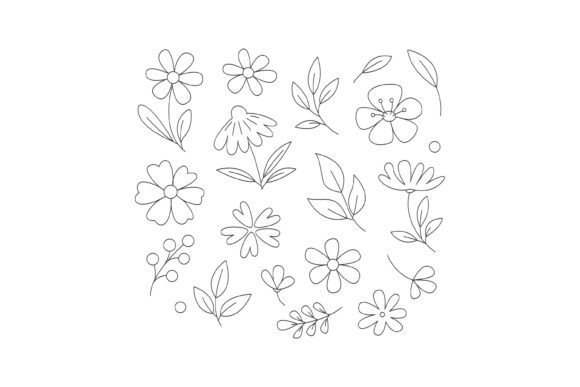
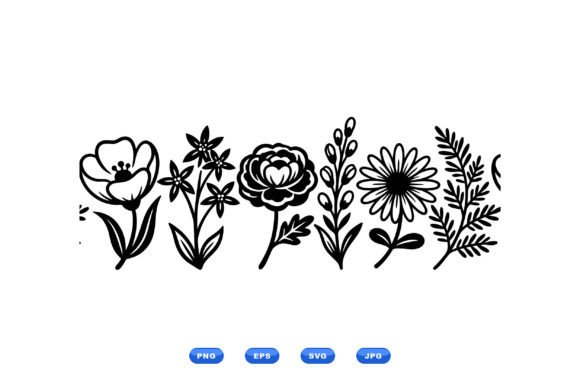
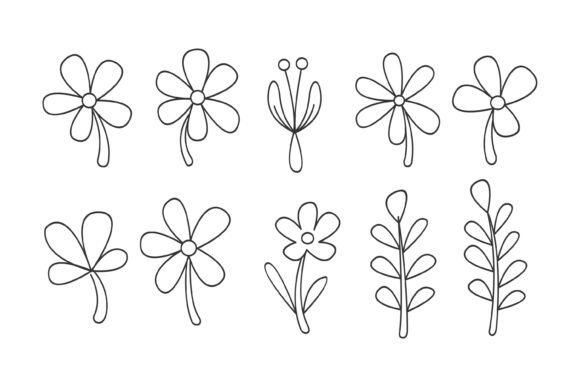
The first thing you notice about Hand-drawn Floral and Leaf Illustrations is the flow. It does not feel like a stamped clipart collection but rather a cohesive botanical study. The lines vary in weight, suggesting a hand-painted or inked origin. This variation is crucial for embroidery because it provides natural stopping points for the needle. A flat, uniform line can look robotic when stitched, but these illustrations have enough nuance to break up the monotony of a fill stitch.
The theme is timeless. Flowers and leaves are staples of the Crafts category, but they never go out of style if executed with care. This specific illustration set feels versatile enough to anchor a rustic farmhouse aesthetic or a modern minimalist nursery. The layout allows for breathing room, which is a huge plus. Many designs fail because they are too dense, forcing the digitizer to cram stitches into spaces where the fabric cannot support them. Here, the negative space is as important as the floral elements, ensuring that the final product looks breathable and professional.
A Real-World Scenario: The Custom Tote Bag
To understand the true value of this asset, imagine a scenario where I am preparing a custom embroidered tote bag for a local farmer's market stall. The client wants something unique that screams "handmade" but needs to withstand daily use. I pull up Hand-drawn Floral and Leaf Illustrations and begin to visualize the placement.
If I were to place this design on a canvas tote, the hand-drawn quality would translate beautifully. The slight irregularities in the leaf shapes mimic the texture of the heavy cotton fabric. Unlike a photorealistic photo which might get muddy when converted to thread colors, this illustration relies on outlines and simple fills. I would likely choose a high-quality satin stitch for the bold outlines to give definition to the petals, while using a running stitch for the finer stems to maintain that delicate, sketched look. The result would be a piece that feels artisanal, increasing the perceived value of the finished product.
Customers browsing at a craft fair respond immediately to designs that don't look mass-produced. By using this file, I could create a limited run of personalized totes for weddings or corporate gifts. The design has the flexibility to be resized for smaller items like apron pockets or larger items like pillow covers without losing its character. It bridges the gap between a hobbyist's weekend project and a polished small business merchandise item.
Performance Across Different Projects
The versatility of Hand-drawn Floral and Leaf Illustrations extends far beyond tote bags. In my experience, this type of graphic works exceptionally well for holiday embroidery projects, such as Christmas stockings or New Year's Eve party favors. The botanical theme is neutral enough to fit winter decor without feeling out of place.
For apparel decorators, this design is a strong candidate for sweatshirt embroidery. The chest area of a hoodie is a prime spot for a medium-sized floral motif. Because the design is vector-based (EPS, SVG, AI), it can be easily manipulated before digitization. I can adjust the spacing between the flowers to ensure they do not crowd the neckline or interfere with the zipper. However, I must be careful with stretchy fabrics. While the design itself is fine, the stability of the garment matters. On a thin t-shirt, I would need to use a cut-away stabilizer to prevent puckering, whereas a thick sweatshirt might only require a tear-away.
Baby items present another exciting opportunity. Parents love soft, gentle imagery for nurseries. Hand-drawn Floral and Leaf Illustrations is perfect for baby onesies, blankets, or even embroidered patches for diaper bags. The lack of sharp, aggressive angles makes it safe and visually soothing. For a boutique owner, this could be the signature element of a new clothing line, providing a consistent brand identity across all products.
Where to Exercise Caution
Despite its strengths, no design is universally perfect. There are specific scenarios where I would advise caution with Hand-drawn Floral and Leaf Illustrations. One major concern is small hoop sizes. If the original illustration contains extremely tiny, intricate details in the center of a flower, those details may disappear or merge together when stitched on a 4x4 hoop. Embroidery machines have a limit to how fine they can render a line; if the detail is too small, it becomes a blob of thread.
Textured fabrics also pose a challenge. If you attempt to stitch this design on a rough burlap or a heavily textured fleece, the needle may struggle to penetrate the material evenly, causing the smooth lines of the illustration to wobble. Similarly, dark fabrics require careful consideration of thread colors. If the background is black and the design uses light gray outlines, the contrast might be lost unless you use a bright white underlay or a heavier stitch density. Always test your thread color choices against the fabric before committing to a full production run.
Curved surfaces like caps are another area to watch. While the design is flexible, the curvature of a hat can distort straight lines. You may need to adjust the digitization settings to compensate for the curve, ensuring the flowers don't appear stretched or squashed. Additionally, avoid using this design for decorative accents that will undergo frequent washing, such as dish towels used daily for scrubbing pots. While beautiful, the durability of the stitch density must be verified to ensure it doesn't snag or fade quickly.
Practical Designer Notes for Success
Before you download and start stitching, there are several technical steps every professional should take. First, always check the licensing terms provided in the download. Since this is a digital product with "Unlimited prints," verify whether you are allowed to sell the finished physical items or if the license restricts you to personal use. This distinction is vital for Etsy sellers and small shop owners who rely on clear legal boundaries.
Once you have confirmed the license, test the design on scrap fabric. Use the same stabilizer and thread colors you plan to use for the final product. Inspect the small details closely; zoom in on your computer screen and then examine the physical sample. Look for any areas where the stitch density might be too high, causing the fabric to pucker, or too low, leaving gaps in the coverage.
It is also wise to create black and white mockups of the design. Sometimes, color distracts us from structural issues. Seeing the design in grayscale helps you evaluate the balance of positive and negative space. Compare how it looks on a light background versus a dark one to ensure the contrast remains effective. Finally, confirm the file formats available. Having access to EPS, SVG, and AI files gives you the freedom to edit the artwork in Adobe Illustrator before sending it to your digitizing software, allowing you to customize the spacing and orientation to fit your specific embroidery project.
In conclusion, Hand-drawn Floral and Leaf Illustrations offers a solid foundation for creating high-end handmade products. It strikes a balance between artistic flair and technical feasibility. With proper planning, attention to fabric selection, and a bit of testing, this design can elevate your craft business and help you deliver finished products that customers love. Whether you are making a personalized gift for a friend or launching a new line of boutique branding, this asset proves that sometimes the best designs are the ones that feel most human.